
Bought Property in Pavones? A Guide for New Owners
Just purchased property in Learn about municipal taxes, property registration, construction permits, utilities, and your responsibilities as a property owner.
After Buying Property in Pavones, Costa Rica: What Every New Owner Needs to Know
Bought Property in Pavones? Purchasing property here is an exciting milestone. Whether you have purchased a beachfront home, an ocean-view lot, a private residence, or an investment property, becoming a property owner also comes with certain legal, municipal, and administrative responsibilities.
Many international buyers are familiar with the purchasing process, but what happens once the transaction is completed?
After closing, there are several important steps to follow to ensure your property is properly registered, your municipal obligations are up to date, and you are prepared for any future construction, improvements, or development.
At First Point Real Estate, we believe that helping buyers understand property ownership should go beyond the closing date. This guide explains the most important things you should know after purchasing real estate in Pavones and the surrounding areas of Costa Rica.
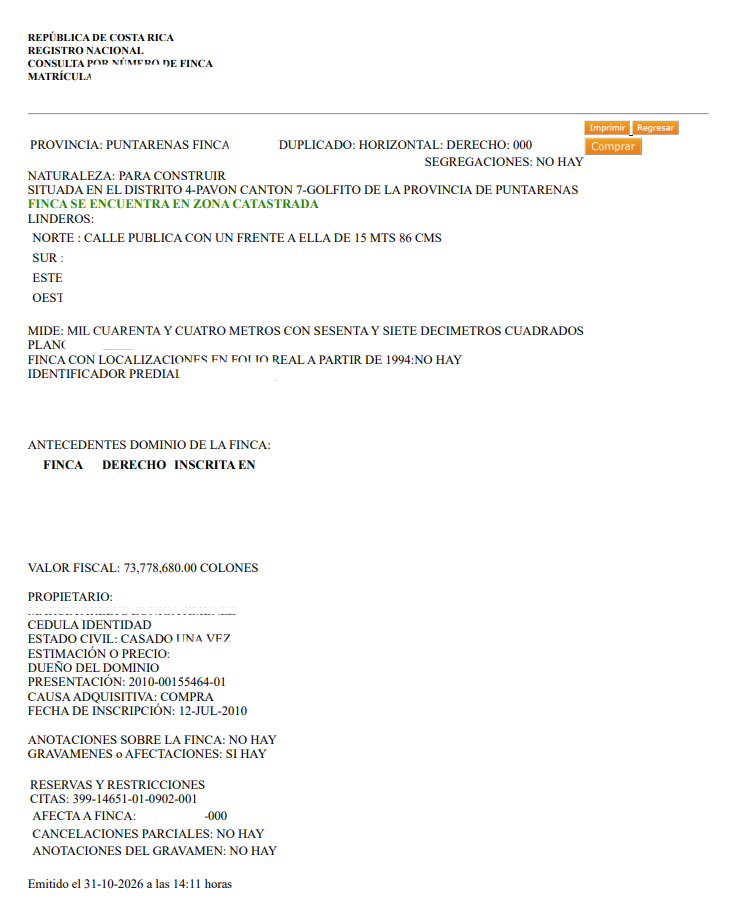
Sample of Property Registration Certificate
Step 1: After Buying Property in Costa Rica: Confirm Your Registration with the National Registry
Once the purchase agreement has been completed and the transfer deed has been signed, your attorney or notary public will submit the necessary documentation to the Costa Rican National Registry (Registro Nacional).
This is an essential step in formally updating the public property records to reflect the new ownership.
Although the transfer deed is signed at closing, you should not assume that the registration process has been completed immediately.
Your attorney should follow up on the registration and confirm when the property has been successfully recorded under your name.
Request an Updated Property Registration Certificate
Once the transfer has been registered, ask your attorney to provide an updated Certificación Literal de Bienes Inmuebles.
This official document identifies important information about your property, including:
The registered property owner.
The property identification number (Folio Real).
The registered land area.
The cadastral plan reference.
Registered mortgages, liens, easements, and other annotations or restrictions.
Keep a digital and printed copy of this certificate with your purchase documents.
You will need this information for several administrative procedures, including registering your property with the Municipality of Golfito.
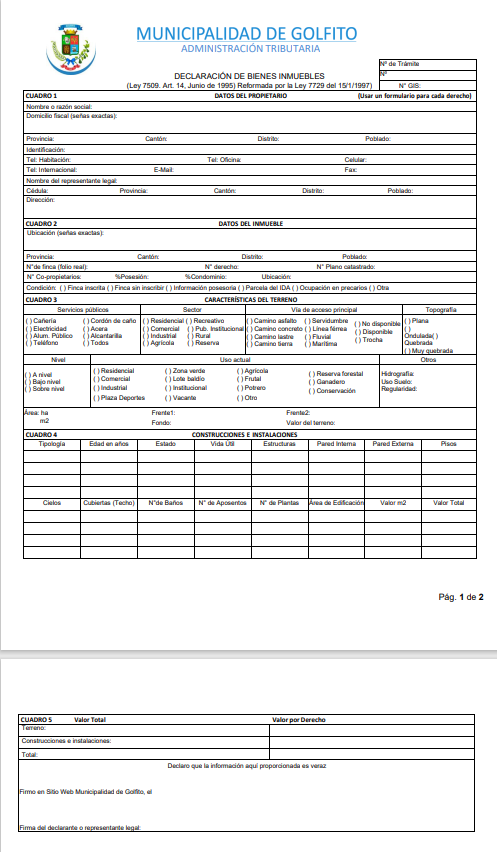
Sample of Declaración de Bienes Inmuebles
Step 2: After Buying Property in Costa Rica: Register Your Property with the Municipality of Golfito
One of the first administrative responsibilities after purchasing property in Pavones is updating the municipal records. Pavones belongs to the canton of Golfito, and property owners must ensure that their property is properly registered with the Municipalidad de Golfito for municipal tax purposes.
Once your property appears under your name in the National Registry, obtain an updated property registration certificate and present it to the municipality.You will need to complete a property value declaration known as the Declaración de Bienes Inmuebles. This declaration establishes the value of your property for municipal taxation purposes.
What Are Municipal Property Taxes in Costa Rica?
Municipal property taxes, known as Impuesto sore Bienes Inmuebles, are annual taxes collected by local municipalities.
The tax collected helps municipalities finance local infrastructure, public services, and community development.
The calculation is straightforward: Registered Property Value × 0.0025 = Annual Property Tax
The amount you pay depends on the taxable value recorded by the municipality, not simply on the amount you paid at closing.
Example: Municipal Property Taxes on a US$100,000 Property
Let’s assume you purchased a property in Pavones for US$100,000 and that the municipality accepts a taxable value equivalent to the purchase price. The estimated annual property tax would be:
| Description | Amount |
| Property Value | US$100,000 |
| Municipal Tax Rate | 0.25% |
| Annual Property Tax | US$250 |
| Quarterly Equivalent | US$62.50 |
In this example, the estimated annual property tax would be US$250. The amount is illustrative. The actual municipal bill will be calculated in Costa Rican colones using the taxable value recorded by the municipality.
Why Is It Important to Declare the Correct Property Value?
This is an area where professional legal guidance is particularly important. When completing your property declaration, your attorney should help you determine an appropriate and defensible value for the property.
The declared value should reasonably reflect the characteristics of the property, including:
- Land size and location.
- Topography and accessibility.
- Availability of public services.
- Existing buildings and permanent improvements.
- General market conditions and comparable properties.
It is important to understand that a higher registered property value generally results in a higher annual municipal property tax. However, declaring an artificially low value simply to reduce taxes is not a good practice. The municipality has the authority to review property valuations and make adjustments in accordance with the law.
The goal is to establish a reasonable value that reflects the property’s actual characteristics while complying with Costa Rican tax regulations
Important: Under Article 16 of Law 7509, property owners must submit an updated property value declaration at least once every five years. The municipality may also modify the registered value under the circumstances established by law.
Step 4: Keep Your Municipal Taxes and Services Up to Date
Once your property is registered with the Municipality of Golfito, make sure you understand all the charges associated with your property. In addition to the annual property tax, certain properties may be subject to municipal service charges.
Depending on the location and services provided, these may include:
- Garbage collection and waste management.
- Other municipal services applicable to the property.
- Outstanding municipal balances or adjustments.
Do not assume that these services are automatically included in your property tax. Ask the municipality for a statement showing your property account and any applicable charges.
Keep payment receipts and verify that your municipal account remains up to date.This is particularly important if you plan to apply for construction permits or other municipal approvals in the future.
Step 5: Planning to Build? Understand the Construction Permit Process
1: Obtain a Land Use Certificate (Uso de Suelo)
Before preparing your construction project, request a Certificado de Uso de Suelo from the Municipality of Golfito
This document identifies the types of activities and development permitted on your property according to the applicable planning regulations.
It is particularly important to confirm:
- Whether residential construction is permitted.
- Whether commercial activities are allowed.
- Applicable development restrictions.
- Building conditions and other planning requirements.
The land use certificate is an important starting point for determining whether your construction plans are compatible with municipal regulations.
2: Hire a Qualified Architect or Civil Engineer
Construction projects in Costa Rica must be designed and professionally supervised according to the applicable building regulations. You should work with qualified professionals registered with the Colegio Federado de Ingenieros y de Arquitectos de Costa Rica (CFIA).
Depending on the project, your professional team may include:
- An architect to develop the architectural design.
- A civil or structural engineer to prepare structural calculations and technical specifications.
- Electrical and mechanical professionals when required.
- Other specialists depending on the nature of the development.
Your professionals will prepare the construction plans and technical documentation required for the corresponding approvals.
3: Submit Your Construction Plans Through the CFIA APC Platform
Construction projects requiring professional plans must generally be submitted through the CFIA’s Administrador de Proyectos de Construcción (APC) platform. This digital system allows the relevant institutions to review the project documentation and provide the required approvals.
Depending on your project, the process may involve:
- Architectural and structural plans.
- Electrical and mechanical designs.
- Water availability documentation.
- Electrical service availability.
- Wastewater and drainage calculations.
- Road alignment approvals.
- Environmental documentation when applicable.
Your architect or engineer should coordinate these technical requirements before submitting the project.
4: Obtain the Municipal Construction Permit
Once the relevant technical requirements have been addressed, the construction permit application must be completed with the Municipality of Golfito. The municipality distinguishes between minor and major construction works, and the applicable requirements depend on the type and scope of the project.
For major construction permits, the municipality currently identifies requirements that may include:
- Identification of the registered property owner.
- A copy of the cadastral survey plan.
- An updated property value declaration.
- Proof that municipal taxes and obligations are current.
- A valid land use certificate.
- Storm-water drainage documentation.
- Water and electricity availability.
- Road alignment certification, where applicable.
- INS construction risk insurance.
- Required CFIA-approved construction plans.
- Environmental approvals when applicable.
The official municipal website indicates an estimated processing period of approximately 15 to 22 business days once the required documentation has been submitted and the applicable requirements have been satisfied. Actual processing times may vary.
Never begin construction before obtaining the required municipal authorization.
5. Environmental Considerations: Important for Property Owners in Pavones
One of the reasons people choose Pavones and the Southern Zone of Costa Rica is the area’s natural beauty, including rivers, streams, forests, wildlife, and coastal ecosystems.
However, these natural features also come with environmental regulations that property owners must respect.
Before clearing vegetation, moving earth, building near a river, or modifying natural drainage, consult the appropriate professionals and authorities.
- River and stream protection areas: Costa Rican environmental legislation establishes protection areas along rivers, streams, and other water bodies. These areas may restrict construction, vegetation removal, and other activities.
- Tree removal and vegetation clearing: Do not assume that you can remove trees or clear all vegetation simply because you own the land. Certain activities require authorization from the appropriate environmental authorities, including SINAC, depending on the circumstances and applicable legislation.
- Environmental viability: Some construction projects and earth-moving activities require environmental review or approval from SETENA (Secretaría Técnica Nacional Ambiental). Your architect, engineer, or environmental consultant should determine which requirements apply before work begins.
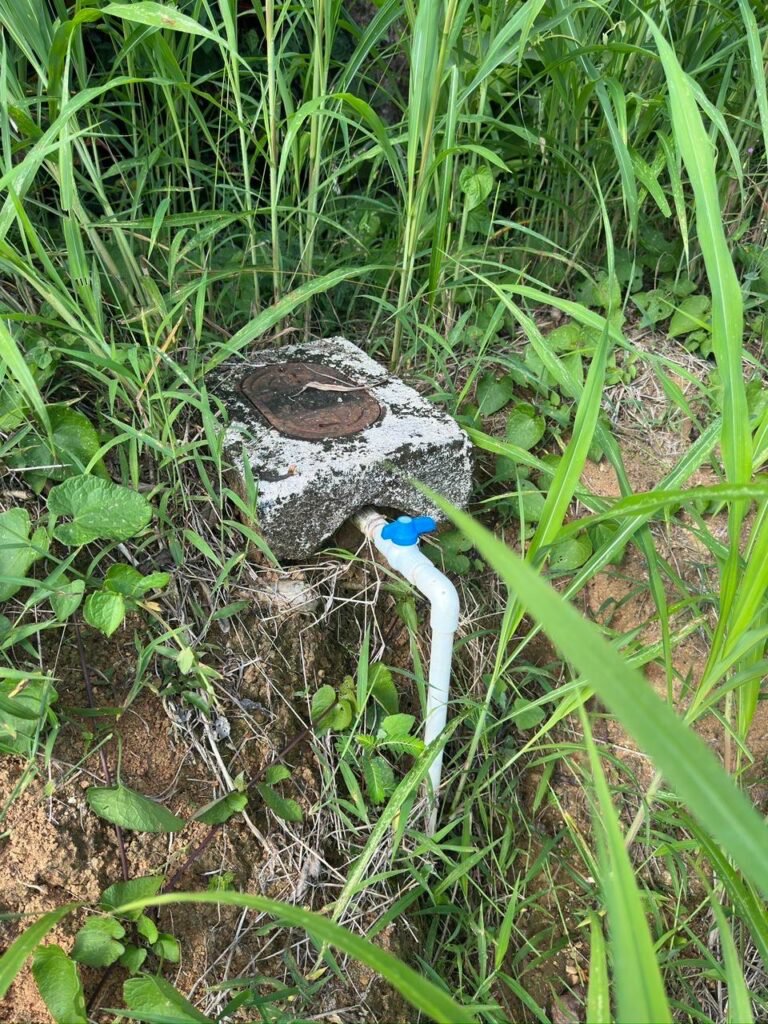
Water Meter
Step 6: Water, Electricity, Internet, and Other Essential Services
After purchasing your property, you should also review the status of all essential services.
If the property already has water and electricity connections, contact the corresponding service providers to update the account information and ensure that billing is properly transferred to your name.
Depending on your location, water service may be provided by an ASADA or another authorized water provider.
If the property does not have a public water connection, do not assume that you can automatically drill a well.
Water abstraction and well development are subject to specific technical and legal requirements. Consult the appropriate authorities before undertaking any work.
For electricity, contact the applicable service provider to arrange account transfers, meter installation, or new connections.
Internet availability should also be confirmed directly with local providers, particularly in more rural areas.
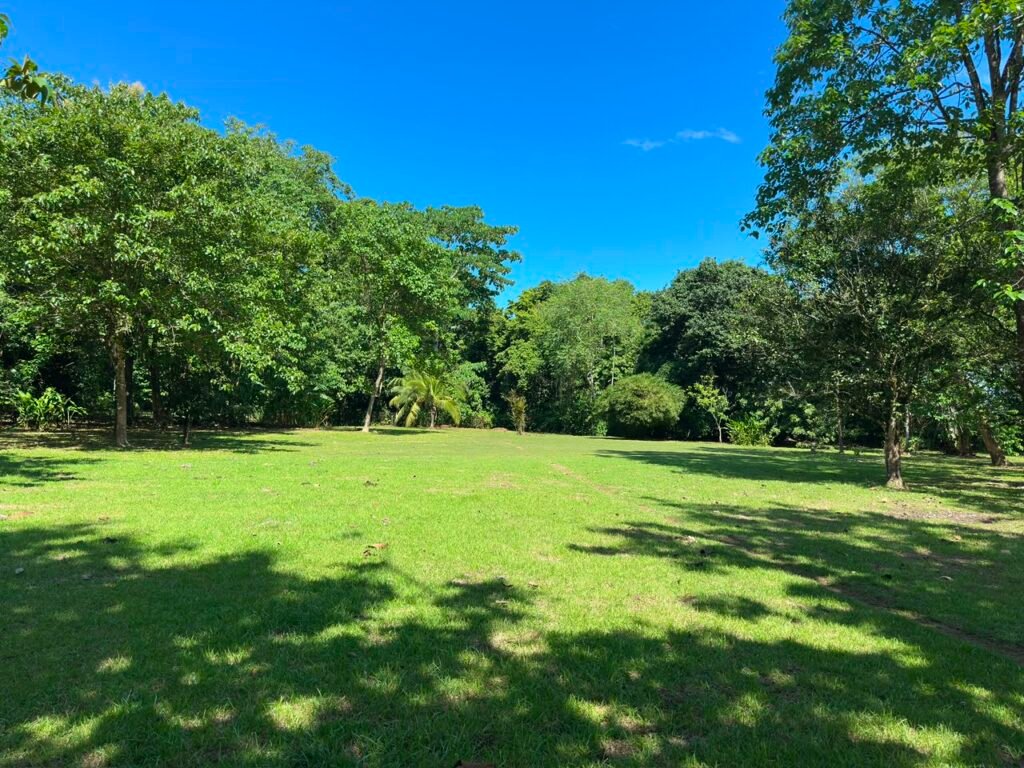
Step 7: Maintain Your Property and Protect Your Investment
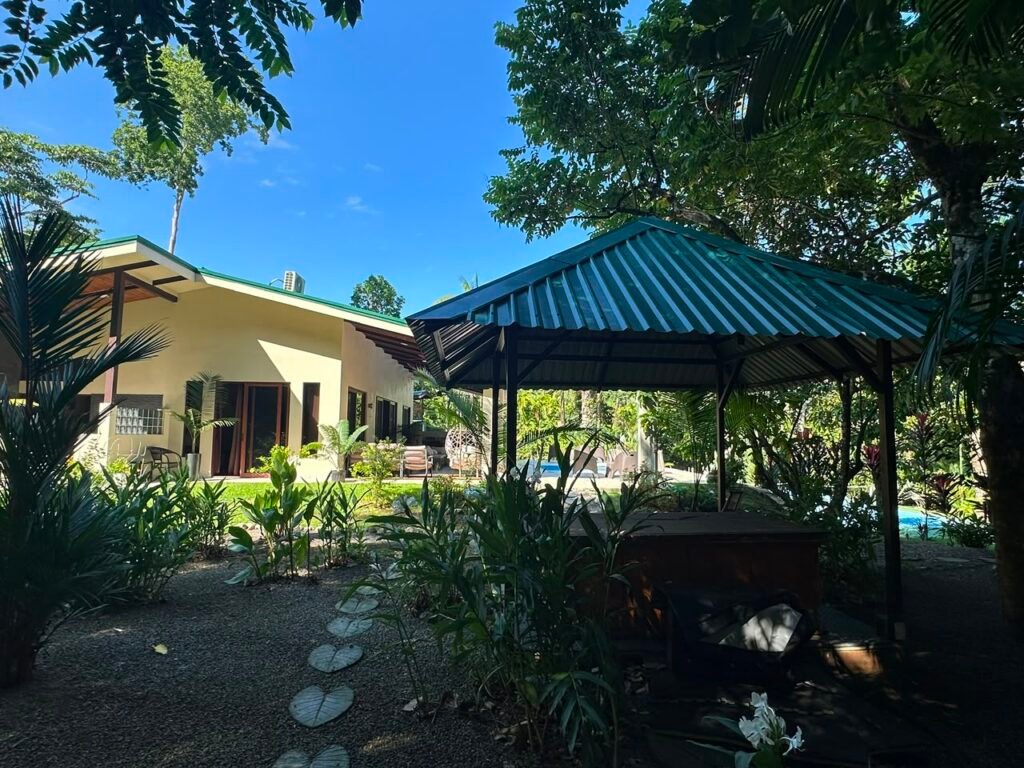
Property ownership also involves ongoing maintenance.
This is especially important in Pavones, where tropical weather, heavy rainfall, humidity, and vegetation can affect buildings and land.
Some recommended responsibilities include:
- Keep the property boundaries clearly identified.
- Maintain access roads and private driveways.
- Control vegetation without violating environmental regulations.
- Inspect roofs, drainage systems, and gutters.
- Check for erosion or water accumulation during the rainy season.
- Maintain septic systems and wastewater infrastructure.
- Inspect buildings regularly for moisture, termites, and other tropical conditions.
- Secure the property when it is unoccupied.
If you own a house that you do not occupy year-round, consider arranging regular inspections with a trusted local property manager or maintenance professional.
It is also advisable to review property insurance options, particularly for homes, buildings, and valuable improvements.
Step 8: Understand Your Responsibilities If You Plan to Rent Your Property
If your intention is to generate income through vacation rentals or other commercial activities, additional obligations may apply.
Before advertising your property as a rental, consult an accountant and the relevant municipal authorities regarding:
- Income tax obligations.
- Applicable VAT requirements.
- Business registration and tax registration.
- Municipal commercial licenses (patentes), where required.
- Applicable tourism regulations.
- Insurance and safety requirements.
The obligations depend on how the property is operated, the type of rental activity, and the legal structure used.
If your property is located within a condominium or a community with a homeowners’ association, remember to review the applicable bylaws and rental restrictions.
Step 9: Keep Your Property Documents Organized
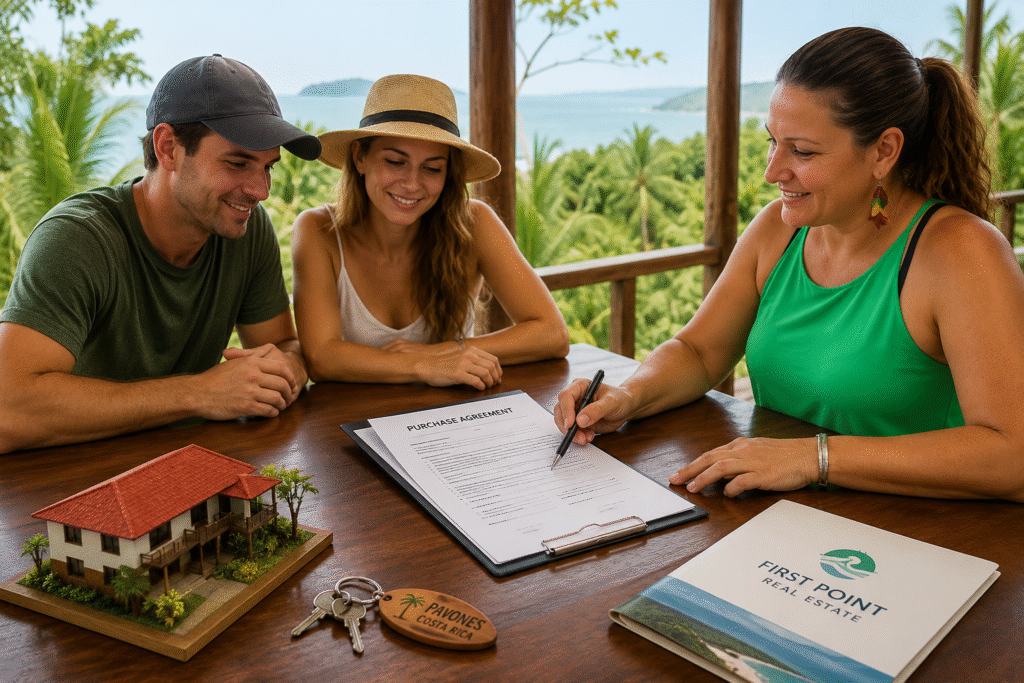
A well-organized property file can save you considerable time and money in the future.
We recommend keeping digital and printed copies of the following documents:
- Purchase agreement.
- Final transfer deed.
- Updated property registration certificate.
- Registered cadastral survey plan.
- Municipal property value declaration.
- Municipal tax payment receipts.
- Water and electricity service documents.
- Land use certificate.
- Construction plans and permits, if applicable.
- Environmental approvals, if applicable.
- Insurance policies.
- Homeowners’ association documents, if applicable.
These documents will be valuable if you decide to build, sell, refinance, transfer ownership, or make improvements to your property.
Step 10: Stay Connected with Local Professionals
Owning property in Pavones can be a rewarding experience, particularly when you understand the responsibilities that come with it.
Costa Rican property regulations, municipal procedures, construction requirements, and environmental restrictions can be different from those in your home country.
Having reliable local professionals available can make a significant difference.
Your attorney should remain your primary point of contact for legal and registry matters. Architects, engineers, accountants, surveyors, and environmental specialists can assist with their respective areas of expertise.
At First Point Real Estate, we understand that our relationship with buyers does not have to end when the transaction closes.
As a locally established real estate business in Pavones, our goal is to help buyers make informed decisions, understand the local property market, and connect with the professionals they may need as property owners.
Your Property Journey Does Not End at Closing
Buying property in Pavones is only the beginning of your journey in Costa Rica.
From registering your property with the Municipality of Golfito to planning construction, maintaining your land, and understanding your ongoing responsibilities, being an informed property owner is one of the best ways to protect your investment.
If you are considering purchasing property in Pavones, we invite you to read our complementary guide: